GDC and HPDC Demystified: Differences and Applications of Gravity Casting and Die Casting
In modern industrial manufacturing, aluminum alloy casting is a key technology for producing lightweight, high-strength parts. Whether it's electric bicycles, automobiles, or advanced robotic arms, many complex core components rely on precise casting processes. Gravity casting (GDC) is like an experienced craftsman, focusing on creating core parts that are internally robust, reliable, and capable of withstanding rigorous testing. High-pressure die casting (HPDC), on the other hand, is like a highly efficient automated production line, adept at rapidly producing aesthetically pleasing, lightweight, and complex standardized products.
What is GDC (Gravity Foundry)?
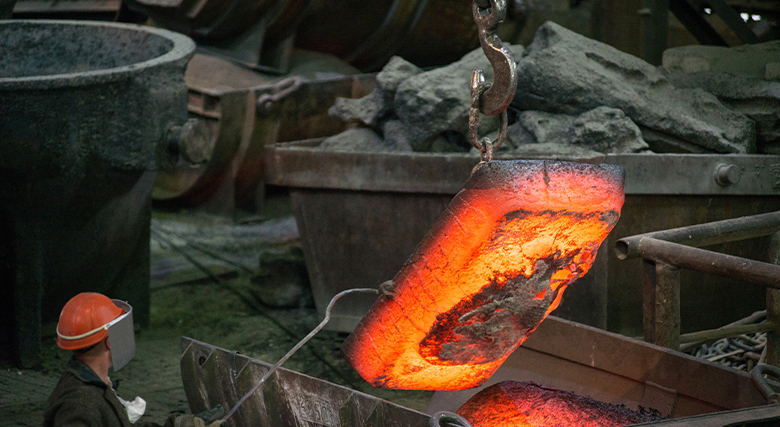
Gravity die casting (GDC), as the name suggests, involves slowly and steadily pouring molten aluminum into a preheated metal die under the influence of gravity, allowing it to solidify naturally. This process is also known as "low-pressure casting" or "permanent mold casting".
Features and Advantages of GDC
- Excellent mechanical properties: Due to the slower flow rate of the molten metal during the filling process, the chance of air entrapment is reduced, and the solidification process is more uniform, resulting in a dense internal structure and low porosity in the casting, thus achieving higher mechanical strength, ductility, and fatigue resistance. This makes gravity-cast parts ideal for structural applications that require the resistance to high pressure or stress.
- Feasibility of heat treatment: Due to the low porosity, gravity castings can usually be directly heat treated to further improve the hardness and strength of the material.
- Cost-effectiveness: Compared to die casting, gravity casting molds are usually less expensive, making it more economical for low to medium batch production orders.
- Flexible design: It can produce castings with thick walls and complex shapes, and can effectively use sand cores or metal cores to create complex internal structures.
What is HPDC (die casting)?
High Pressure Die Casting (HPDC) is a casting method that uses high pressure to rapidly force molten metal into a metal mold cavity, where it solidifies under high pressure. Based on the method of injection, it can be further divided into hot chamber die casting and cold chamber die casting.
Features and Advantages of HPDC
- Extremely high production efficiency: The molten metal is rapidly filled into the mold under high pressure, and the solidification time is short, so the production speed is extremely fast, making it very suitable for mass production.
- Excellent surface finish and dimensional accuracy: Due to high-pressure filling and rapid solidification, die castings have smooth surfaces and precise dimensions, usually requiring little or no subsequent processing.
- Thin-walled castings: capable of producing extremely thin walls, effectively reducing product weight.
How to choose? When to apply GDC and HPDC?
The choice between gravity casting and die casting is not a simple matter of which is better or worse, but rather depends on your product needs, production volume, budget, and end use.
Gravity casting (GDC) is chosen in several key situations: When high-strength and reliable parts are required, such as automotive engine mounts, wheel rims, suspension components, and critical components in robotic arms subjected to repeated stresses, gravity casting offers excellent mechanical properties and low porosity, making it suitable for heat treatment to enhance performance. For low- to medium-volume production, gravity casting offers longer mold life and a more cost-effective overall solution. Furthermore, if parts have complex internal structures requiring the formation of cavities and flow channels using sand cores or metal cores, gravity casting can effectively meet these needs. Ming Ming Aluminum leverages these advantages to serve multiple industries, including electric bicycles, motorcycles, and automobiles.
When your product requires large-scale, high-efficiency mass production, high-performance die casting (HPDC) is the unparalleled choice. Its extremely fast production cycle significantly reduces unit costs, making it ideal for consumer electronics casings, appliance parts, and other products with high annual demand. Furthermore, if the product has extremely high standards for appearance and precision, HPDC provides a smooth, flat surface and excellent dimensional tolerances. Finished products often require no secondary processing before direct assembly, making it an ideal process for exterior parts. The characteristics of high-pressure injection also make it adept at manufacturing complex, lightweight, thin-walled parts, enabling the creation of lightweight and sophisticated product designs.
There is no best process, only the most suitable choice.
In summary, GDC and HPDC are not inherently superior or inferior, but rather two complementary technologies addressing different needs. Through its professional GDC technology, Ming Ming Aluminum provides global customers with high-standard precision parts, helping various industries enhance product performance and market competitiveness. When deciding which casting method to use for your next project, please contact the expert team at Ming Ming Aluminum. We are happy to provide customized professional advice based on your specific needs, working together to create high-quality products.