What is casting?
Casting Method
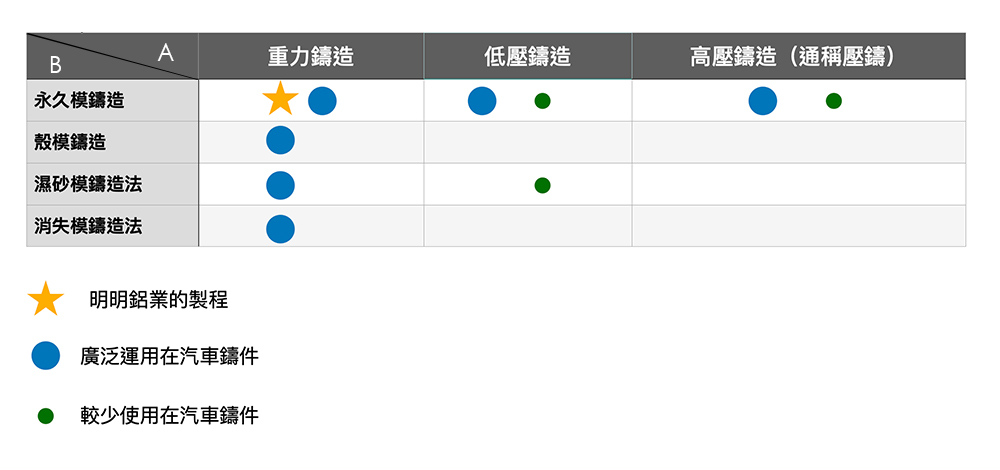
Modern metal castings can be divided into four types (Figure 1). Ming Ming Aluminum's gravity casting belongs to permanent mold casting.
Figure 1:
Materials Used in Casting
Materials used in casting include metals, plaster, concrete, and resin. The most commonly used materials for metal castings include gray cast iron, ductile iron, aluminum, steel, copper, and zinc. Ming Ming Aluminum specializes in gravity casting of aluminum alloys, providing tailored applications for various industries.
learn more
Mold Material
A mold is a tool used to shape casting materials; to obtain the required structural shape of the cast part, the shape and structure of the part to be cast must first be shaped from other materials with higher melting points and easier formability. The type of mold technology depends on the complexity of the required model, and whether the mold can be opened or closed. In metal casting, closed molds are common.
Based on whether they can be reused, molds can be divided into consumable and permanent molds. Permanent molds are usually made of metal or refractory ceramics and can be reused to manufacture a variety of metal castings.
In gravity casting, molds are typically made of metal or graphite. Ming Ming Aluminum uses non-consumable, permanent molds for gravity casting; these molds are made of metal and coated with a layer of agent before use to ensure easier separation of the casting from the mold after cooling. Learn more