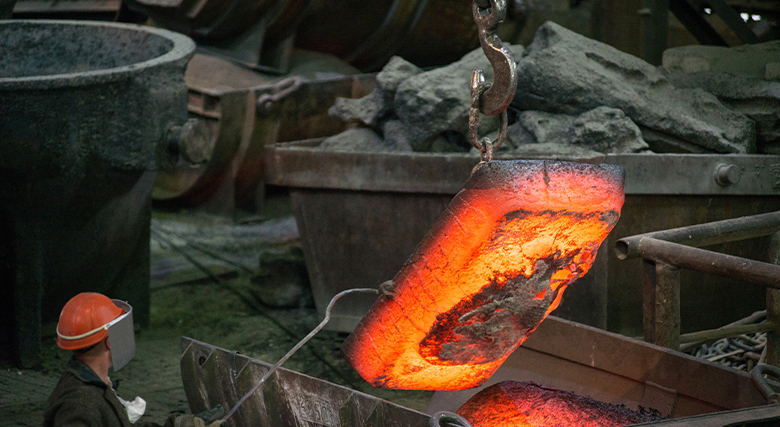
From Ground to Air: Gravity Casting's Lightweight Revolution in Robotic Arms and Drones
From factory floors to aerial views, the lightweight revolution is accelerating. Robotic arm components and drone parts simultaneously demand both "lightweight" and "high rigidity/high stability." Ming Ming Aluminum combines gravity casting (aluminum recasting) with topological optimization and high-performance alloys to create lightweight structural components that combine weight efficiency and dimensional stability.
Why are lightweight and high rigidity so important?
For robotic arm components, the weight of each joint directly affects its load-bearing capacity and reaction speed. Lighter materials mean the arm can withstand greater effective loads during movement, reducing inertia and improving operational precision and efficiency. At the same time, high rigidity ensures that the arm will not deform under high-speed movement or load, maintaining positioning accuracy.
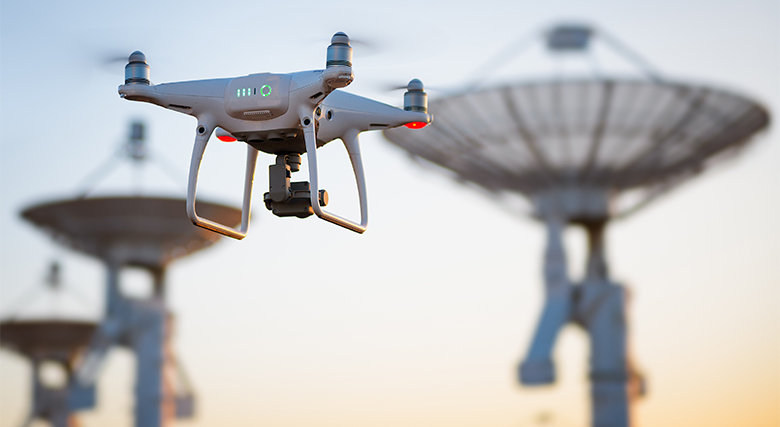
For drone components, lightweighting of the fuselage structure is fundamental to extending flight range, improving flight stability, and increasing payload capacity. Every gram of weight reduction is significant. However, lightweighting must not sacrifice strength and safety, which requires materials to have an excellent strength-to-weight ratio and sufficient structural rigidity to withstand vibrations and metal fatigue stresses during flight.
Gravity Casting: The Ideal Choice for Lightweight Structural Components
Among numerous manufacturing processes, gravity casting of aluminum alloys has become an ideal solution to meet the needs of these high-tech industries due to its unique advantages. Compared to other casting methods, gravity casting can produce:
- Dense and uniform internal structure: As the molten metal slowly fills the mold cavity and solidifies under the action of gravity, there are fewer pores and inclusions inside the casting, making the material denser and improving its mechanical properties. Especially after T6 heat treatment, the potential of high-performance alloys such as A356 and A357 can be brought to the extreme.
- Excellent mechanical properties: The formed castings exhibit outstanding strength, hardness, and fatigue resistance, and can effectively resist complex stresses.
- The ability to form complex shapes: It can cast complex parts with internal channels (such as heat dissipation structures or circuit layouts), reducing post-processing.
With the rapid development of automation and aerospace technology, the demand for lightweight and high-rigidity materials will continue to grow. Ming Ming Aluminum provides a one-stop solution, from DFM collaboration, finite element analysis and filling/solidification simulation to heat treatment, precision machining and surface finishing, ensuring that every gravity-cast aluminum alloy part achieves optimal results in terms of cost, performance and delivery.
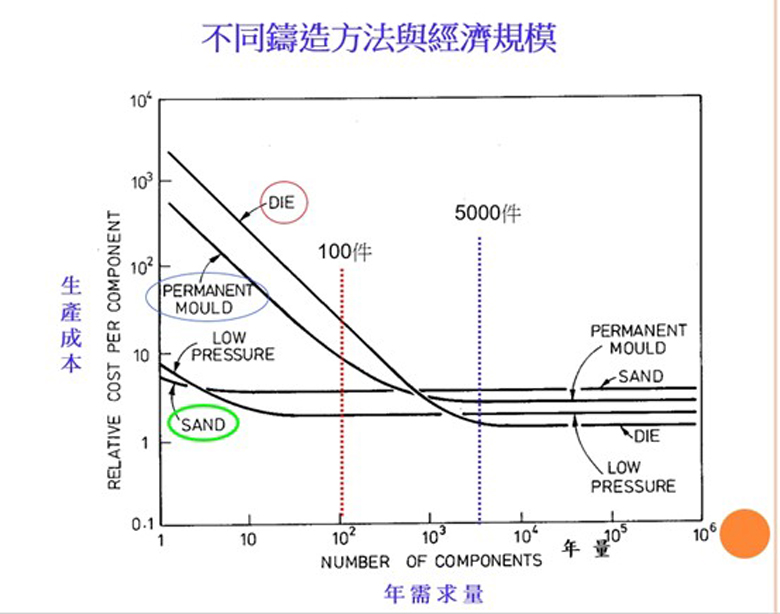
#Add a table of commonly used materials and mechanical properties for recasting
| A Brief Introduction to Various (Aluminum Alloy) Casting Methods | |||
|---|---|---|---|
| Casting Method | Illustrate | Dimensional Accuracy | |
| 1 | Sand casting method Water glass (CO2) casting method Furan mold casting method Lost foam casting |
Using sand as mold material | Low |
| 2 | Lost casting Centrifugal casting method Continuous casting method |
Special materials are used as mold materials | high |
| 3 | High pressure casting method Low-pressure casting method semi-solid casting Forging and casting method Gravity casting method |
Using metal as mold material | middle |
| Comparison of the Advantages and Disadvantages of Various Casting Methods | |||
|---|---|---|---|
| Casting Method | Advantage | Shortcoming | |
| 1 | Sand Mold | Cheap molds | Poor dimensional accuracy |
| 2 | Die Casting | * Yield rate 75-80% Short production cycle * Can produce thin castings Processing volume |
* Cannot be used with sand cores * Casting dimensions are limited by the machine tool. * Prone to the formation of pores * Unfavorable for small-scale production |
| 3 | Gravity Casting | * Yield rate 50-60% * Complex parts can be made using sand cores. |
* Slower production speed |
| 4 | Low-pressure Casting | * High yield rate, approximately 90-98%. * Dimensions |
* directional solidification is required. High equipment costs |
| 5 | Lost Casting | * Smooth surface * Selectable metal * Precise dimensions |
* Complex manufacturing process * Poor mechanical properties |
| 6 | Lost Foam Casting | * The model does not require a draft angle. * No sand core required * Simple model making |
* Only one model can be cast. CO2 is generated during casting. * Unable to inspect the mold cavity after molding. |
| Comparison of the Advantages and Disadvantages of Various Casting Methods | |||||
|---|---|---|---|---|---|
| type | Minimum Weight | Minimum Thickness (mm) | Tolerance (± inches) | Labor Costs | Equipment Costs |
| Sand Mold | 30g | 3 | 0.2 | middle | Low |
| Die Casting | 100g | 0.5 | 0.002 | Extremely low | Extremely high |
| Recast | 100g | 2.5 | 0.015 | Low | middle |
| Low Pressure | 100g | 2.5 | 0.015 | Low | high |
| Dewaxing | 30g | 0.5 | 0.003 | high | middle |