The devil is in the details: How NDT (Natural Density Testing) protects the quality of your castings
In the quality control of castings, defects, whether inside or outside the casting, are key factors affecting quality. External defects can be inspected visually, but internal defects require non-destructive testing using high-energy X-rays.
In casting quality control, the truly fatal flaws are often not visual defects, but internal defects that are invisible to the naked eye. X-ray nondestructive testing (NDT) uses high-energy rays to penetrate materials and convert density differences into images, which can effectively reveal hidden risks such as porosity, shrinkage cavities, inclusions, cold shuts, and lack of fusion. It is particularly suitable for critical parts in aluminum recasting and gravity casting.
What is X-ray nondestructive testing (X-ray NDT)?
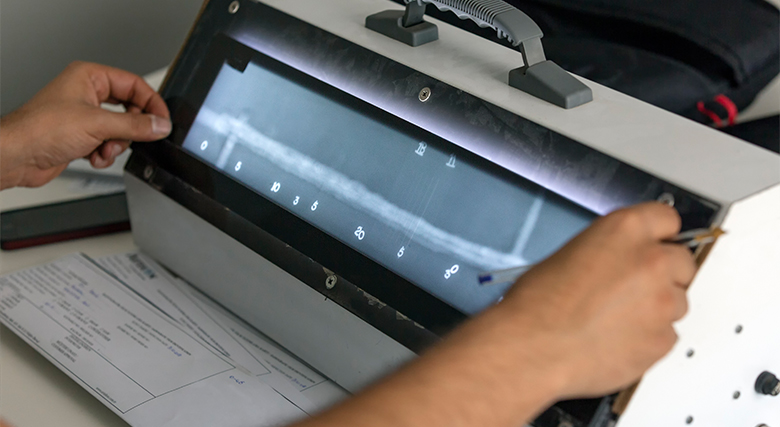
Non-destructive testing (NDT) is a method of assessing the integrity of materials or components without damaging or affecting the future function of a product. X-ray inspection utilizes the principle that X-rays penetrate objects. When X-rays penetrate a casting, their attenuation varies depending on the material's density, thickness, or internal defects (such as porosity, cracks, inclusions, shrinkage cavities, etc.). These penetrating rays are received by X-ray films or digital detectors, forming grayscale images from which engineers can identify the internal structure and potential defects of the casting.
Why is X-ray flaw detection so important for casting quality inspection?
For aluminum alloy parts produced through gravity casting, although process control is quite rigorous, some unavoidable internal defects may still occur due to factors such as the solidification process of the molten metal, mold design, or operational variables. These defects include:
- Porosity: Small air bubbles that form when gas cannot escape during the solidification process of molten metal.
- Shrinkage: A cavity formed when molten metal shrinks during solidification due to insufficient feeding.
- Inclusions: Non-metallic impurities mixed into the interior of the casting.
Furthermore, X-ray inspection can be combined with specialized software for image analysis, quantifying the size and distribution of defects. This helps engineers gain a deeper understanding of the casting process and improve production management. This meticulous attention to detail reflects the company's commitment to high quality, preventing defective products that do not meet customer X-ray defect standards from entering the market, and enhancing customer trust and satisfaction.
In summary, X-ray nondestructive testing technology is an indispensable tool for the aluminum recasting and gravity casting industries to ensure the quality of castings. Through high-precision internal flaw detection, it safeguards every detail and achieves excellent product performance and stable and reliable production standards.